
Get Healthy!
- Posted February 3, 2026
Faced With Common Heart Failure Symptoms, Most Young Adults Wouldn't Seek Care
Alex Balmes’ symptoms were uncommon for a 32-year-old -- irregular heartbeat, fatigue, shortness of breath, bloating, unexpected weight gain.
In fact, these are all classic symptoms of heart failure, but Balmes didn’t give that possibility any thought at all.
“I thought that's something that comes with old age,” Balmes, from Orlando, Florida, said in a news release.
Balmes isn’t alone, a new survey says.
Fewer than 1 in 10 (9%) of Americans would schedule an appointment with a cardiologist if they experienced these symptoms, according to the survey from Orlando Health.
Likewise, half of Americans wouldn’t even bother calling their primary care doc to schedule an appointment, the survey found.
It’s normal for patients to miss the significance of these symptoms, particularly if they’re younger, said Dr. Yahaira Ortiz, a cardiologist at the Orlando Health Heart and Vascular Institute.
People might even misread their symptoms, Ortiz said in a news release. For instance, some might chalk up their fatigue and shortness of breath to a virus.
Balmes dismissed his irregular heartbeat as feeling jittery.
“I always just said, ‘That's anxiety. I don't need to go to a doctor,’ ” Balmes said.
“I think if you're having a little bit of a cold and it goes away within a few days, maybe a week, it should be OK,” Ortiz said. “But if these symptoms are really interrupting your day-to-day to the point where you are unable to lay down, unable to do physical activity the way you used to, you should seek medical attention immediately.”
Getting a diagnosis might require some persistence. Even doctors might not initially recognize these symptoms as signs of heart disease, especially among younger adults, she said.
“When it's a young patient, it’s usually dismissed. It is not standard to think that somebody that young is going to be sick,” Ortiz said. “If you're going to a provider that’s not recognizing persisting symptoms, you should seek further medical attention.”
Balmes wound up going to the ER after his organs began to fail from his heart problems.
“I could tell right away that he was in trouble,” Ortiz said.
She recommended that Balmes receive a left ventricular assist device (LVAD), a battery-powered chest implant that helps move blood through the body.
“This pump is now doing the job of the heart, so whatever residual activity the heart may still have, it can still contract, but most of the job is being done by the pump, allowing better blood flow,” Ortiz said.
It takes about three months to recover from receiving an LVAD implant, Ortiz said. It’s usually used as a temporary measure, to either give the heart a chance to heal itself or to keep a patient alive while awaiting a heart transplant.
In Balmes’ case, he will eventually need a transplant, Ortiz said.
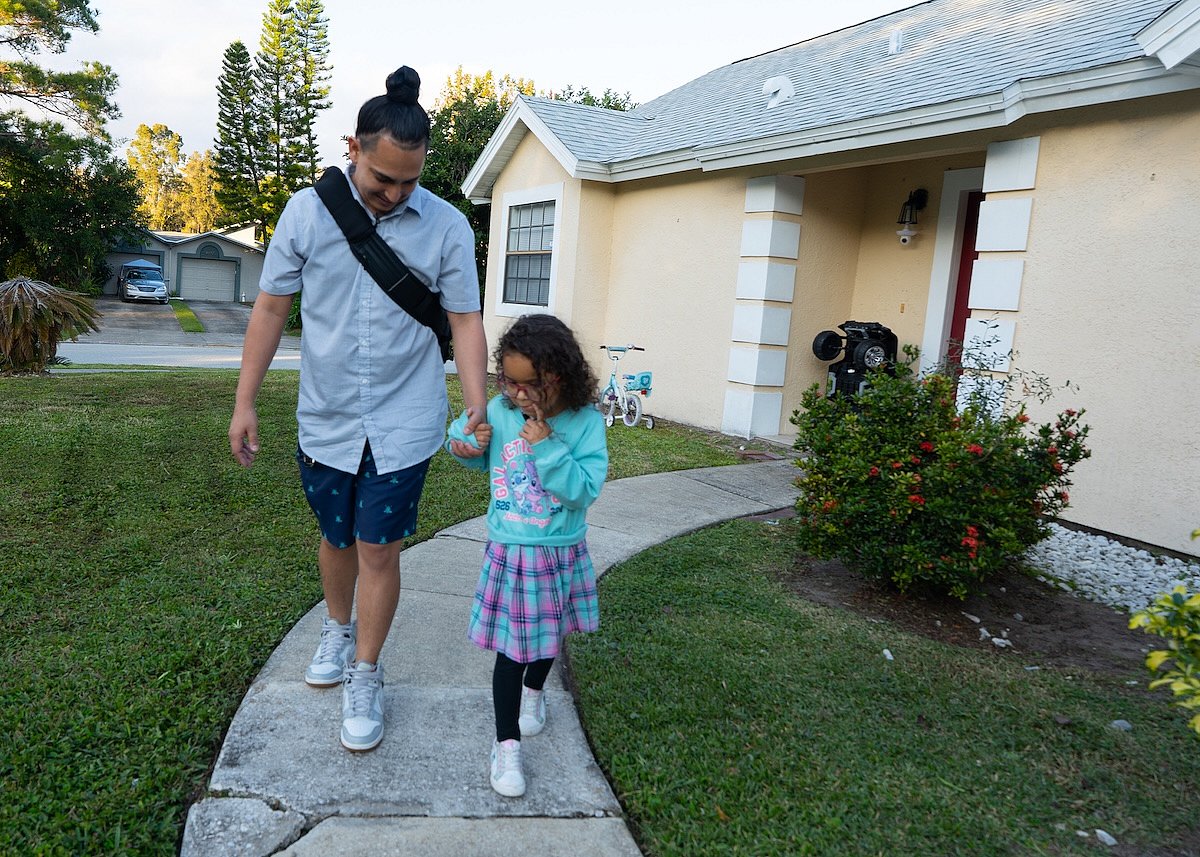
“You don't realize how sick you are until you get healthy,” Balmes said. “Now, I'm back to playing regularly with my daughter. She forgets that I have batteries. I’ve just got to slow it down a little bit. I try to say, at least for me so young, I just got older faster.”
There are many risk factors for heart failure among young adults, Balmes said. These include obesity, high blood pressure, diabetes, kidney disease, alcohol, and genetic and environmental factors.
“It's a lot more common now than it was in prior years, unfortunately,” Ortiz said.
The online survey involved 1,022 U.S. adults and was conducted Nov. 21 to 23. It has a margin of error of plus or minus 3.2 percentage points.
More information
Yale School of Medicine has more on heart failure in young adults.
SOURCE: Orlando Health, news release, Feb. 3, 2026


